WRITING
From Streamlit to Tauri: Bringing Water Engineering Tools to the Desktop

Background
Computational tools in the water conservancy industry come with one peculiar requirement: many users work in environments without internet access (think field surveys at remote sites). The Streamlit version was quick to build, but it can only be used online.
So I started a Streamlit → Tauri migration plan, with the goal of progressively turning 12 hydro-* water computation tools into desktop applications.
Migration Strategy
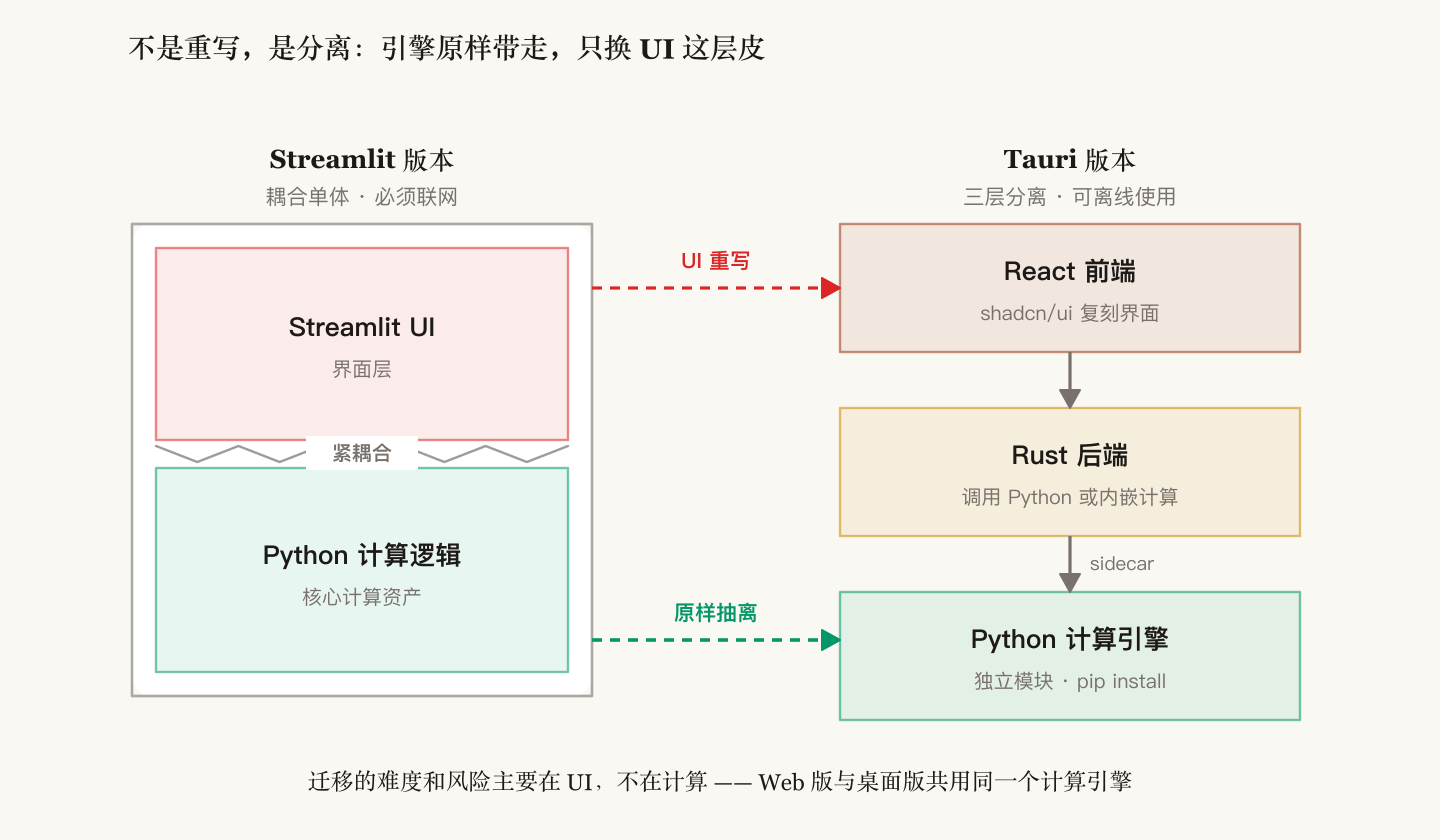
It's Not a Rewrite — It's a Separation
The core idea is to separate the compute engine from the UI:
Three Phases
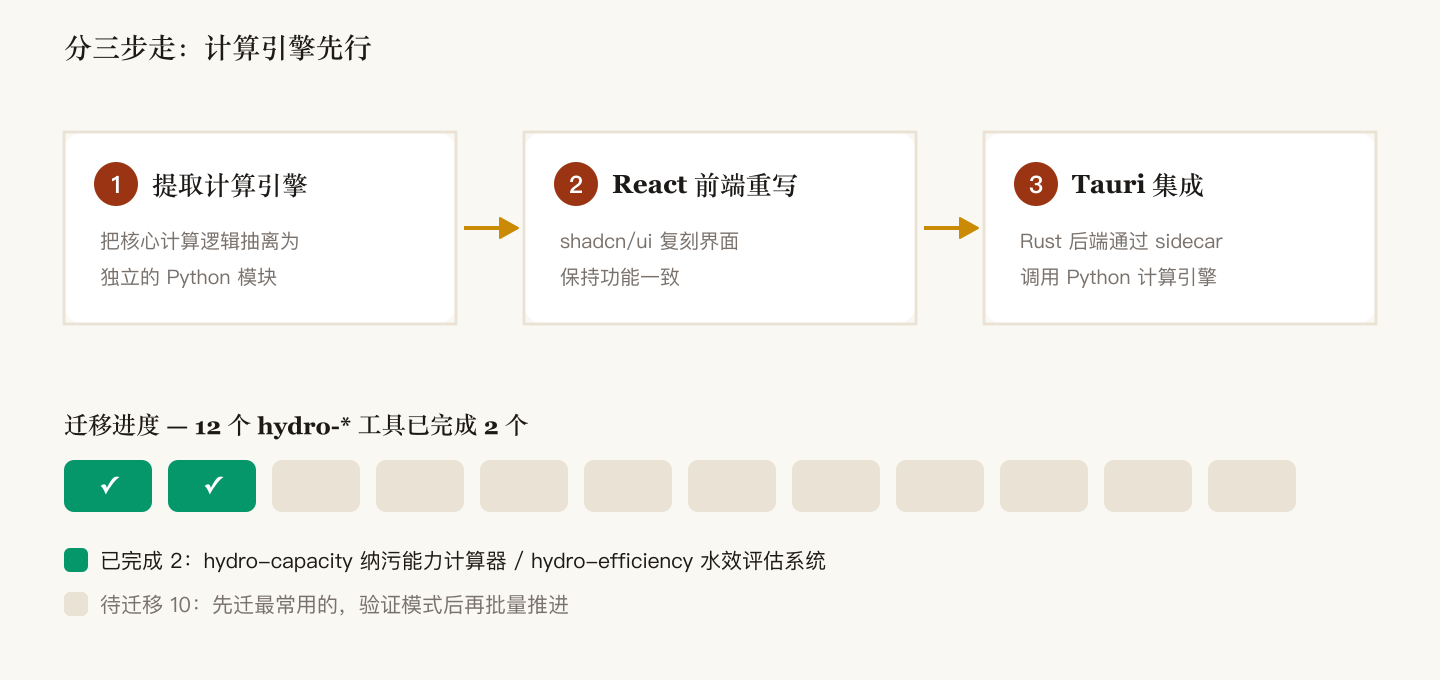
- Extract the compute engine: peel the core computational logic out of the Streamlit code into an independent Python module
- Rewrite the frontend in React: replicate the Streamlit interface with shadcn/ui, keeping functional parity
- Tauri integration: the Rust backend invokes the Python compute engine through a sidecar
Pitfalls
1. rsync and symlinks
By default, rsync doesn't follow symlinks during deployment, which causes linked files inside node_modules to disappear.
Fix: rsync -aL (the L flag follows symlinks).
2. Native modules
Native modules like better-sqlite3 behave differently inside Tauri's sidecar environment.
Fix: keep the compute layer pure Python and avoid native modules on the frontend.
3. Webpack crash
Some React components cause webpack memory blowups inside Tauri's webview.
Fix: split chunks and lazy-load the heavy components.
4. CSS hash mismatch
When the standalone build and the static files come from different builds, CSS filenames carry different hashes — and styles vanish.
Fix: rm -rf .next before every deploy to guarantee both come from the same build.
Migration Progress
Two tools have been migrated so far:
- hydro-capacity: Pollutant Assimilation Capacity calculator
- hydro-efficiency: Water Efficiency Assessment system
Each tool ships as both web and desktop. The web version runs on the VPS; the desktop version works offline.
Lessons Learned
- A standalone compute engine is the key — the difficulty and risk of migration sit in the UI, not the math
- Don't aim for one-shot completion — migrate the most-used tool first, validate the pattern, then scale up
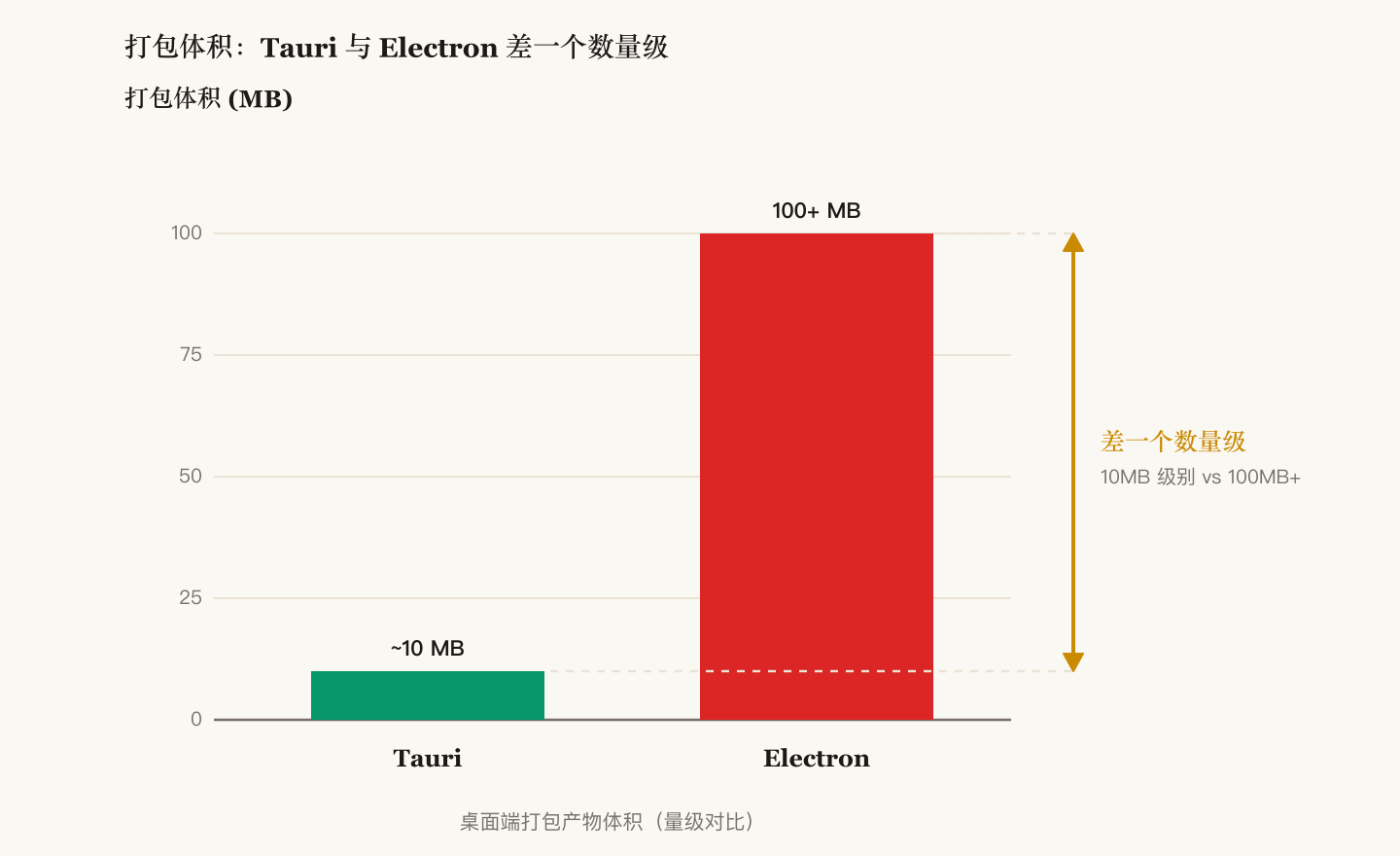
- Tauri is far lighter than Electron — packaged binaries are tens of MB instead of 100+ MB
- Keep the web version online — desktop is a complement, not a replacement
RELATED
FOLLOW
New posts land here first. Subscribe via RSS: /feed.xml
AUTHOR
Tianli Zeng
Hydraulic engineer. I write about AI methodology and engineering practice.